
Securing vehicle access points is a key priority for critical infrastructure. At utility sites such as electrical substations, energy facilities and restricted technical areas, unauthorized entry is not limited to traditional intrusion attempts. One of the most common risks is tailgating.
Tailgating occurs when a person or vehicle enters a protected area by closely following an authorized user through a gate, door or access point, without presenting valid credentials.
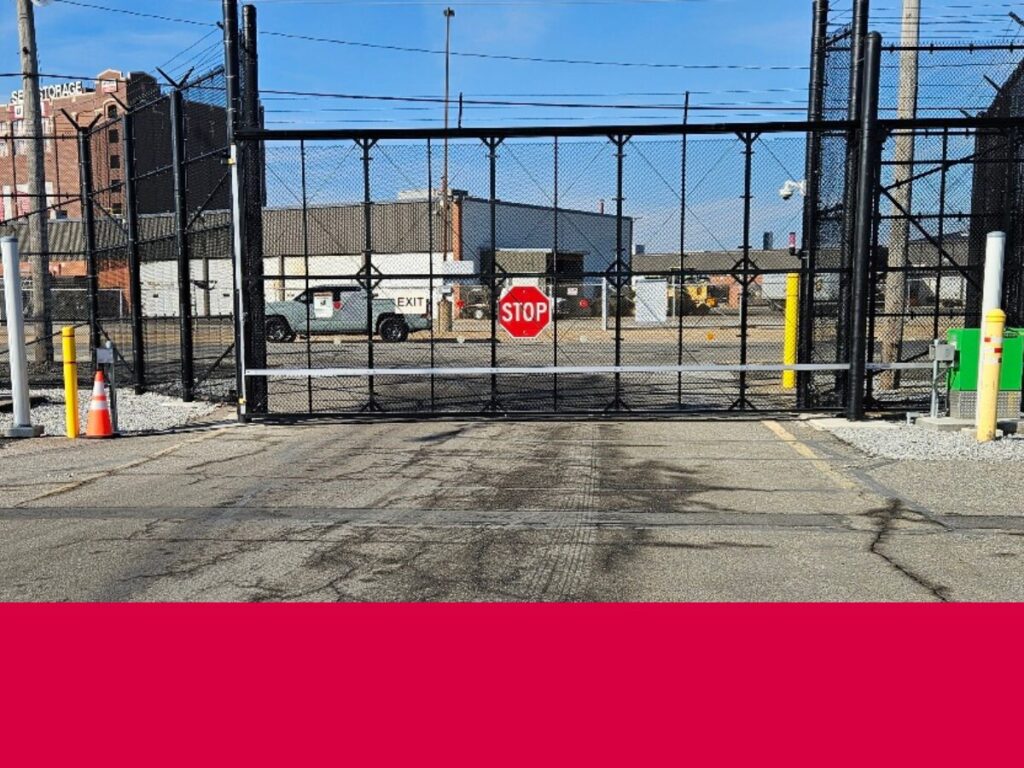
At a major U.S. utility, this was the challenge to be addressed. Authorized vehicles accessed the site by presenting a badge, but the time required for the sliding gate to close could allow unauthorized people or vehicles to enter immediately behind them.
Although the site was monitored by video surveillance 24/7, the system was mainly used to review events after they had occurred. The customer needed a more proactive solution, able to detect unauthorized access attempts in real time.
To meet this requirement, an anti- tailgating system based on CIAS MICRO-RAY linear microwave barrier was installed and integrated with access control, PLC, visual/acoustic signaling and video surveillance. The barrier creates a narrow and accurate detection zone inside the gate area, helping distinguish authorized access from a possible tailgating attempt.
When the gate is opened via badge, wireless reader or intercom, the system enables access and displays a green light to indicate that entry is allowed. Once the authorized user has passed through, the signal returns to red: the next user must present a valid credential before entering.
If a person or vehicle attempts to follow without authorization, the system triggers a visual and acoustic alarm, calls up dedicated cameras and records the event in the access control history.
A distinctive feature of the installation is the use of microwave technology, which is particularly suitable for outdoor environments and challenging weather conditions. The result is a reliable, configurable and scalable system that can be replicated across other gates or sensitive sites.
In the short term, the utility gained a faster response to potential unauthorized access. In the long term, the architecture supports deployment at additional substations, helping strengthen perimeter security and operational continuity.
Read the full case history in the dedicated leaflet.