
How do you measure the effectiveness of an intrusion detection system?
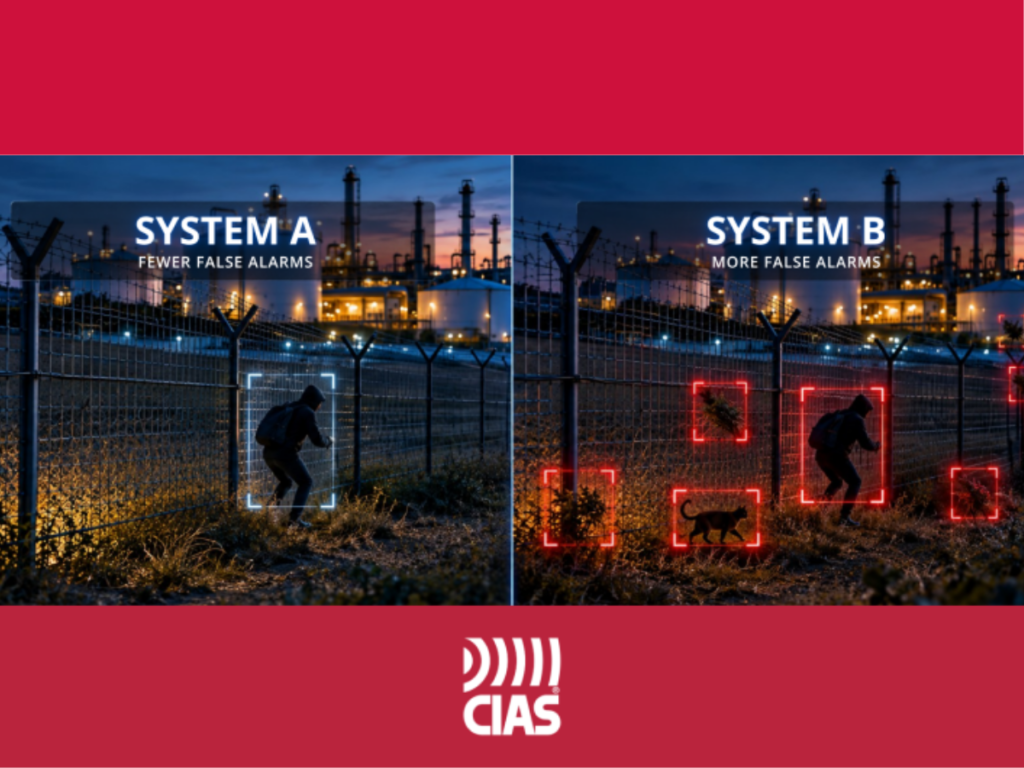
Consider two perimeter security systems:
- System A: generates one nuisance alarm per month.
- System B: generates several nuisance alarms per week.
Which system is more reliable?
The answer is not as straightforward as it seems. One crucial parameter is missing: which system has a higher probability of detecting a real intrusion?
This is the challenge every security system designer faces: finding the right balance between a high Probability of Detection (Pd) and a low Nuisance Alarm Rate (NAR).
The challenge?
Increasing detection probability may also increase nuisance alarms, while reducing them too aggressively can compromise the system’s ability to identify genuine threats.
An effective security system is not necessarily the one that generates the fewest alarms. It is the one that reliably detects real intrusions while keeping nuisance alarms within acceptable limits.
This balance is especially critical in perimeter intrusion detection systems (PIDS) protecting critical infrastructure, where an undetected intrusion could disrupt essential services such as electricity, gas, or water supply, potentially putting people’s safety at risk.
Because in perimeter security, one additional nuisance alarm may be far preferable to a single undetected intrusion.
(The second article in our series exploring detection quality and the design of modern security systems. By Courtesy of CIAS Sp z o o.)